YOSHIWARA · TOKYO
History & culture
Yoshiwara moved location and changed institution more than once. Reading its history means keeping the Edo licensed quarter, later systems and today's neighbourhood distinct.
01
History & culture
1617 · Old Yoshiwara
The shogunate permitted a licensed quarter near present-day Nihonbashi Ningyocho. This was not the location of today's Yoshiwara.
1657 · New Yoshiwara
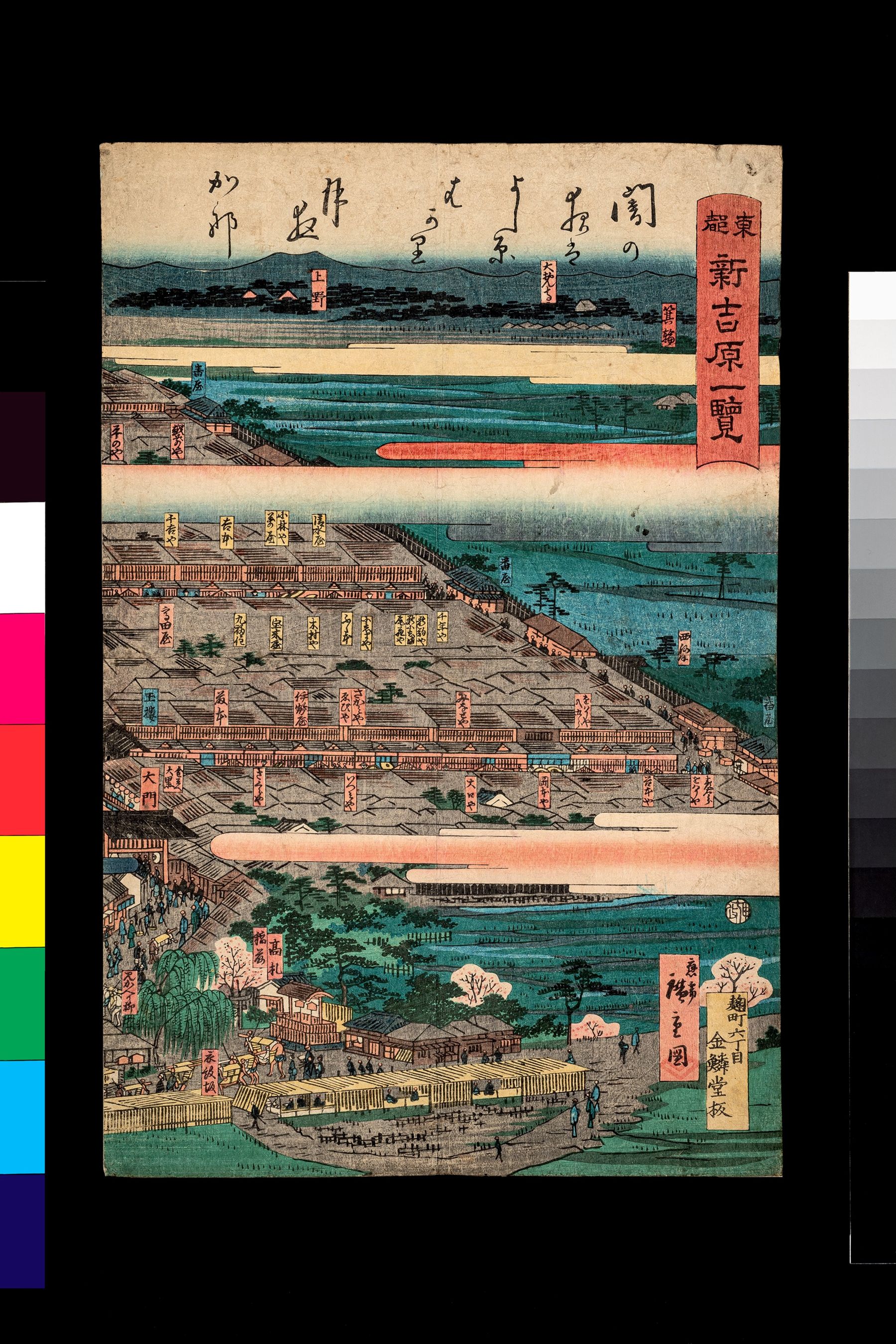
After the Great Fire of Meireki, the quarter moved to the Asakusa Senzoku area. Nihonzutsumi, the approach road and the Omon gate shaped its historic entrance.
Meiji to postwar
The 1872 emancipation order did not immediately end the regulated system. After the Second World War, the licensed prostitution system was abolished and the area entered a different period.
1958 and today
The Prostitution Prevention Act came fully into force in 1958. Present-day businesses operate within a different legal framework; the Edo institution did not simply continue unchanged.
02
Reading historic images
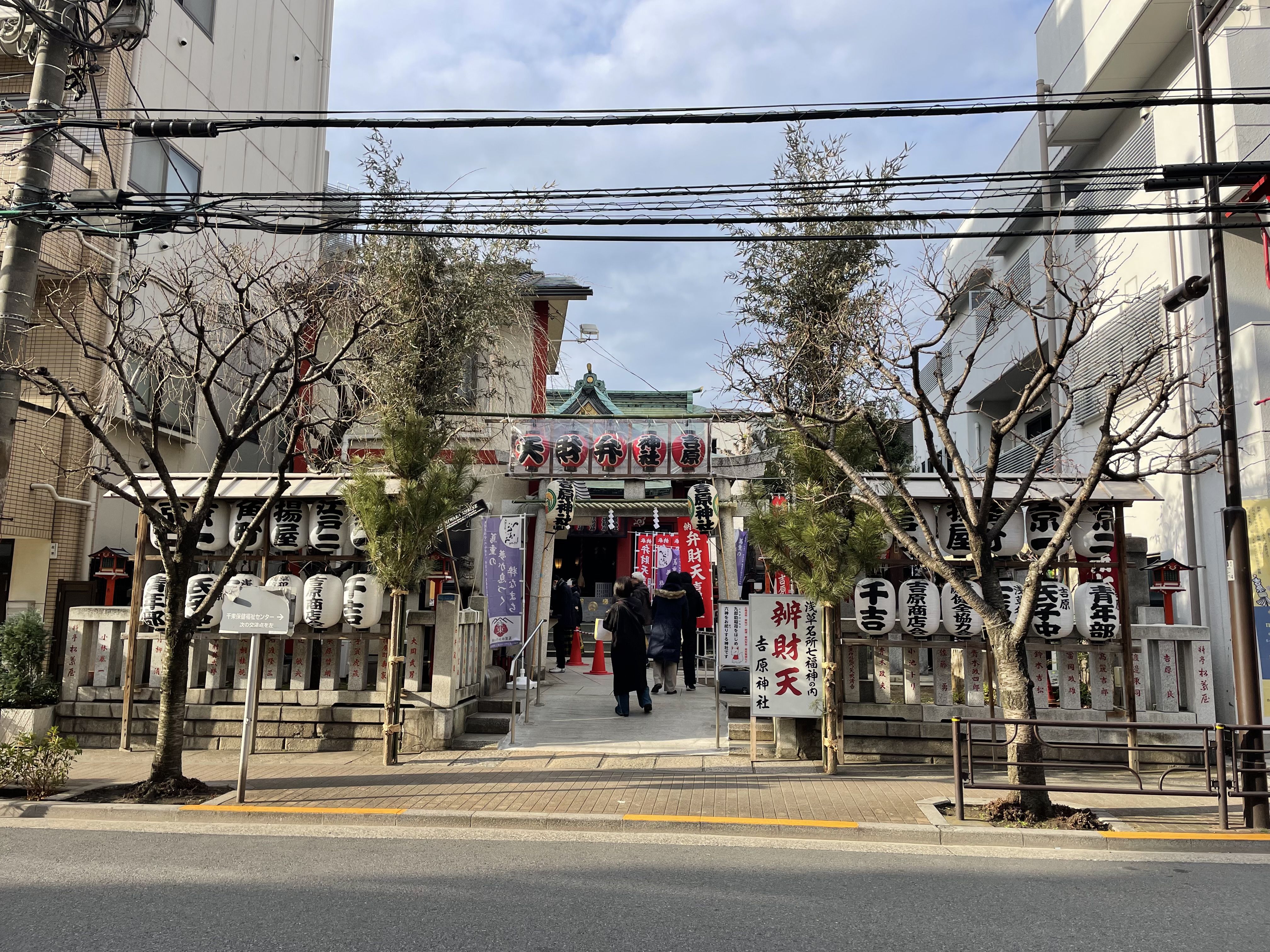
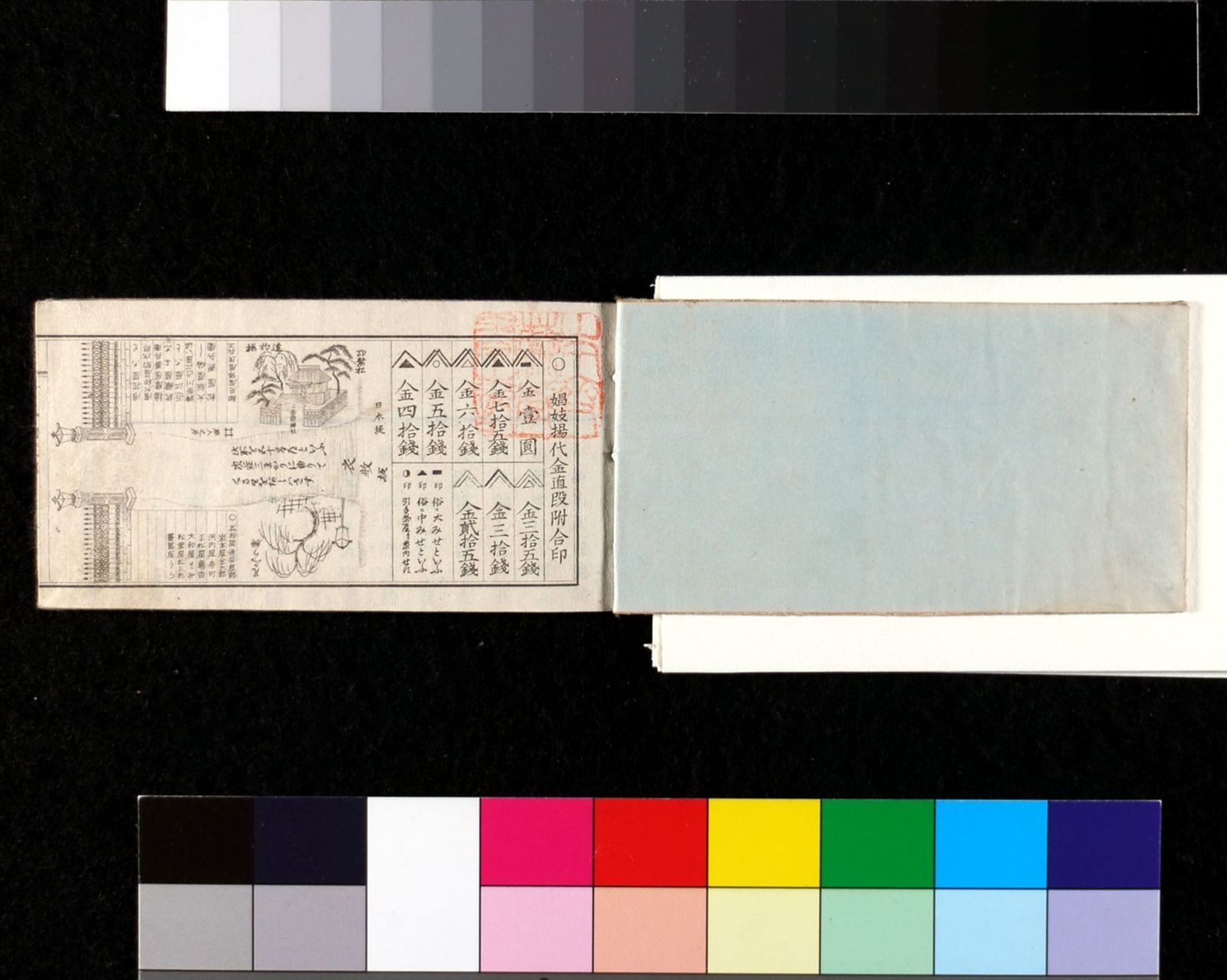
Maps and guidebooks show how the district was represented in its own time. They are historical sources, not a modern visitor map. The present-day shrine and entrance markers help locate the past in today's streets.
03
Traces in today's streets
This history also concerns people who lived and worked under unequal conditions. The guide treats the records as evidence rather than nostalgia.